
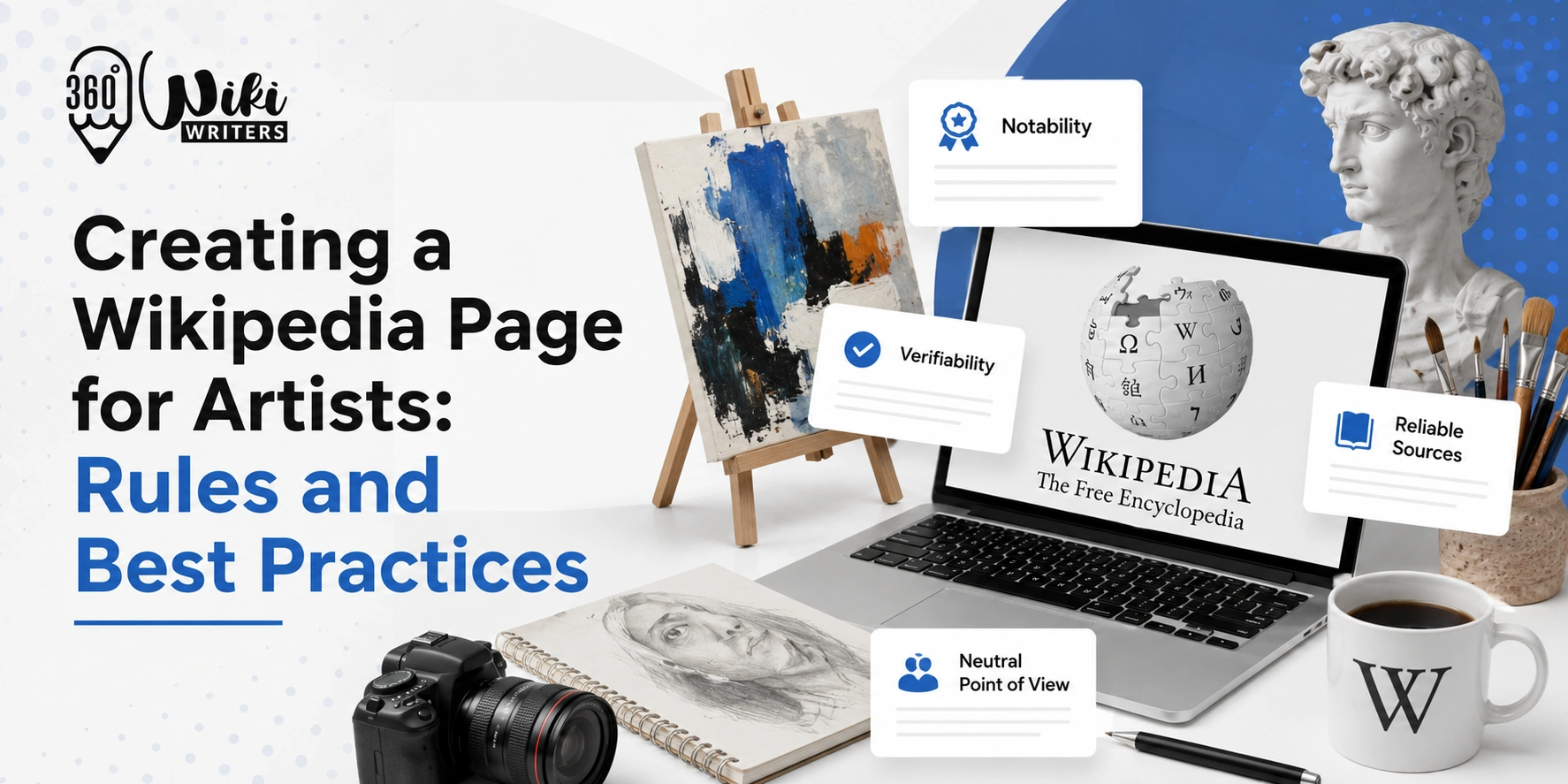

Have you ever searched for your favorite musician, painter, actor, or artist on Google and noticed that neat little box on the right side of the screen? That is the Google Knowledge Panel, and more often than not, it pulls its information directly from Wikipedia.
For any creative professional in 2026, having a presence on the world’s most famous encyclopedia is the ultimate badge of credibility. It’s the digital equivalent of a verified checkmark, but with much more weight.
However, Wikipedia page creation for an artist is not as simple as setting up an Instagram or LinkedIn profile. You can’t just upload a bio, add a few photos, and call it a day. Wikipedia has incredibly strict rules, and if you don’t follow them, your page will be deleted faster than you can say notability. To succeed, you have to understand Wikipedia standards for artist profiles and treat the process with the respect it deserves.
Whether you are looking for a Wikipedia official page for artists or you are specifically interested in creating a Wikipedia page For Actors, this guide will walk you through the dos and don’ts of the process.
Why Every Artist Wants a Wikipedia Page
Before we get into the “how,” let’s talk about the “why.” Why is there so much buzz around the Wikipedia page creation for an artist?
First, it’s about search engine authority. Wikipedia pages almost always rank on the first page of Google. If someone searches your name, you want them to find a neutral, well-sourced biography rather than a random gossip site or an old social media post.
Second, it provides a “Source of Truth.” Journalists, booking agents, and gallery owners use Wikipedia to verify an artist’s history. If it’s on Wiki, it’s generally accepted as fact. This is why following Wikipedia standards for artist profiles is so important; it ensures that your history is preserved accurately for the long haul.
Rule #1: The Golden Gate of “Notability”
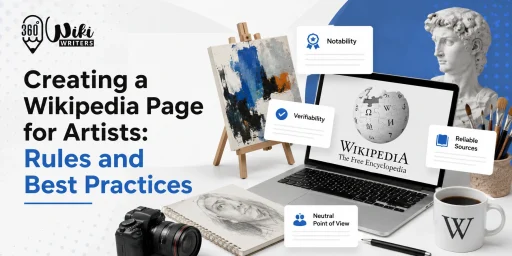
The biggest hurdle in Wikipedia page creation for an artist is a concept called notability. In simple terms, Wikipedia doesn’t care how talented you are; it only cares if the world has noticed you.
To have a Wikipedia official page for artists, the subject must be notable. This means they have received significant coverage in reliable, independent, third-party sources.
What Counts as a Reliable Source?
- Major News Outlets: Features in The New York Times, The Guardian, or Rolling Stone.
- Specialized Journals: For a painter, this might be a deep dive into Artforum.
- Books: Being mentioned in an academic book about modern art or cinema.
- Awards: Winning (or being nominated for) a major award like a Grammy, Oscar, or a prestigious art prize.
What Does NOT Count?
- Press Releases: These are written by you or your PR team, so they aren’t independent.
- Social media: It doesn’t matter if you have a million followers; Wikipedia considers social media self-published.
- Interviews: Ironically, an interview where you talk about yourself is often considered a primary source. Wikipedia prefers secondary sources where a journalist writes about you.
- IMDb/SoundCloud/Etsy: These are user-generated databases and do not prove notability.
The Specifics of Creating a Wikipedia Page for Actors
The entertainment industry is one of the most active areas on the site, but creating a Wikipedia page for actors comes with its own set of challenges. Because there are so many aspiring actors, the community of editors is very protective of who gets a page.
When creating a Wikipedia page for actors, you need to prove that the actor has played a significant role in multiple notable productions. A background extra or a “Man in Suit #2” usually won’t qualify for a page. However, if the actor has a recurring role in a major TV show or has been the subject of multiple critical reviews for their performance, they likely meet the Wikipedia standards for artist profiles.
Actor-Specific Requirements:
- Critical Reception: Reviews in Variety or The Hollywood Reporter that specifically mention the actor’s performance.
- Filmography: A documented list of roles in productions that already have their own Wikipedia pages.
- Awards and Nominations: Not just a win, but even a nomination for a recognized industry award can often be enough to tip the scales toward notability.
Let’s Understand Wikipedia Standards for Artist Profiles
Wikipedia is an encyclopedia, not a promotional platform. This is the hardest lesson for artists to learn. If your page sounds like a fan club wrote it, it will be flagged for promotional tone.
The Neutral Point of View (NPOV)
To maintain the Wikipedia official page for artists, the writing must be dry.
Wrong: “She is a visionary genius who creates breathtaking landscapes.”
Right: “She is a landscape painter known for her use of oil on canvas.”
Avoid peacock terms like legendary, world-class, amazing, or award-winning (unless you are listing an actual award). Let the facts speak for themselves. If you are truly visionary, the sources you cite will prove it; you don’t need to say it.
Verifiability, Not Truth
This is a famous Wikipedia mantra. It doesn’t matter if something is true if you can’t prove it with a reliable source. If you won a local art contest in 1995 but there’s no newspaper article online or archived publication to verify it, that achievement generally can’t be included by a Wikipedia page creation agency when developing or updating an artist’s Wikipedia page.
Step-by-Step Guide to Wikipedia Page Creation for an Artist
If you believe you or your client meets the criteria, here is the professional workflow for getting a page live.
1. Research and Sourcing
Before you write a single word, gather at least 5 to 10 high-quality, independent sources. If you can’t find these, stop now. You aren’t ready for a Wikipedia page yet. Spend the next few months working on your PR to get those major features first.
2. Create an Account and Build a Reputation
Don’t just create an account and immediately try to post a page about yourself. That is a “red flag” for editors. Instead, create an account and spend a few weeks making small, helpful edits to other pages. Fix typos, add citations to existing articles, and learn how the community works.
3. The Sandbox Phase
Every user has a “Sandbox”, a private drafting area. Write your draft here. This allows you to format your filmography tables, add your infobox (that blue box with the artist’s photo and stats), and get your citations in order without the pressure of the public eye.
4. Writing the Draft
Organize the article logically. For an artist, a typical structure looks like this:
- Lead Paragraph: A summary of who they are and why they matter.
- Early Life and Education: Where they were born and where they studied.
- Career/Artistic Style: A breakdown of their major periods or works.
- Notable Works/Exhibitions: A list of their most important creations.
- Awards: A list of honors received.
- References: The most important section, this is where your sources live.
5. Submission (Articles for Creation)
Instead of publishing directly to the “Mainspace,” submit your draft through the “Articles for Creation” (AfC) process. A volunteer editor will review your draft and give you feedback. They might say, “This person isn’t notable yet,” or “Your tone is too promotional.” Listen to them! They are giving you a roadmap to success.
Common Pitfalls to Avoid
Even if you have the best intentions, it’s easy to mess up the Wikipedia page creation for an artist. Here are the most common traps:
Conflict of Interest (COI)
Wikipedia strongly discourages people from writing about themselves. If you are an artist and you write your own page, you must disclose it. Failure to disclose a COI can result in your account being banned and the page being salted (protected from being recreated). This is why many people hire a professional agency to handle the Wikipedia official page for artists on their behalf.
Using Primary Sources
Don’t cite your own website or your own YouTube channel. These are primary sources. To meet Wikipedia standards for artist profiles, at least 90% of your citations should be secondary sources (news, books, journals).
Copyright Infringement
You cannot copy and paste your bio from your official website. Even though you own the website, Wikipedia considers this a copyright violation. You must write the content from scratch in your own words.
Best Practices for Creating a Wikipedia Page for Actors
Actors have a unique challenge: the “Filmography.” This table needs to be formatted perfectly using Wiki-markup.
Be Complete: List the year, title, role, and notes (e.g., “Main role,” “Voice only”).
Link Appropriately: If the film has a Wikipedia page, link to it. If it doesn’t, don’t create a “red link” unless the film itself is definitely notable.
Handle the Infobox: Use the Template: Infobox person or Template: Infobox actor. This helps search engines understand the data and populates the Google Knowledge Panel we talked about earlier.
When creating a Wikipedia page for actors, remember that the community values longevity. A breakout star with one big hit might be notable today, but editors look for evidence that the actor has a sustained career.
Maintaining the Artist Profile
Getting the page live is just the beginning. Wikipedia is a living document. Once your official Wikipedia page for artists is up, other people will edit it. Some might add new information, while others might remove things they think are unsourced.
Watchlist: Add the page to your “Watchlist” so you get notified of any changes.
The Talk Page: If someone adds something incorrect or negative, don’t just delete it. Go to the “Talk” page and explain why the change should be made. Provide sources.
Update Regularly: If the artist wins a new award or releases a new album, make sure the page is updated. However, always ensure the update follows the same Wikipedia standards for artist profiles as the original draft.
Why Professional Help is Often the Best Route
Wikipedia page creation for an artist is a full-time job. It requires hours of research, technical coding knowledge, and an understanding of complex community policies that change almost every year.

For many creatives, it is better to focus on their art and leave the “Wiki-work” to the experts. Professional services understand the nuances of Wikipedia standards for artist profiles. They know how to communicate with editors, how to format complex tables for those creating a Wikipedia page For Actors, and how to ensure a page stays live once it is published.
Summary Checklist for Artists
If you’re ready to start your journey toward a Wikipedia official page for artists, keep this checklist handy:
- Objective Notability: Do I have at least 5-7 major media features?
- Independent Sources: Are these sources from websites I don’t control?
- Neutral Tone: Is the writing factual rather than “hype”?
- Proper Formatting: Have I used the correct infoboxes and filmography tables?
- Community Engagement: Am I working with the editors rather than fighting against them?
Final Words
Wikipedia is the most powerful tool for establishing your digital legacy. Wikipedia page creation for an artist is a rigorous process, but the rewards are immense. It signals to the world that you have arrived, and it provides a stable, authoritative source of information for fans and professionals alike.
By adhering to Wikipedia standards for artist profiles and focusing on high-quality, independent sourcing, you can build a page that stands the test of time. Whether you are creating a Wikipedia page For Actors or building a profile for a sculptor, the key is patience, neutrality, and a deep respect for the platform’s rules.
Ready to take your professional identity to the next level? Start gathering your sources today, and you might just see your name in the world’s encyclopedia tomorrow.
Don’t leave your digital reputation to chance. If you need expert guidance on your Wikipedia journey, contact us today, and let’s tell your story the right way.